Crucible, reverberatory or shaft melting? Why Cast Products chose StrikoMelter®
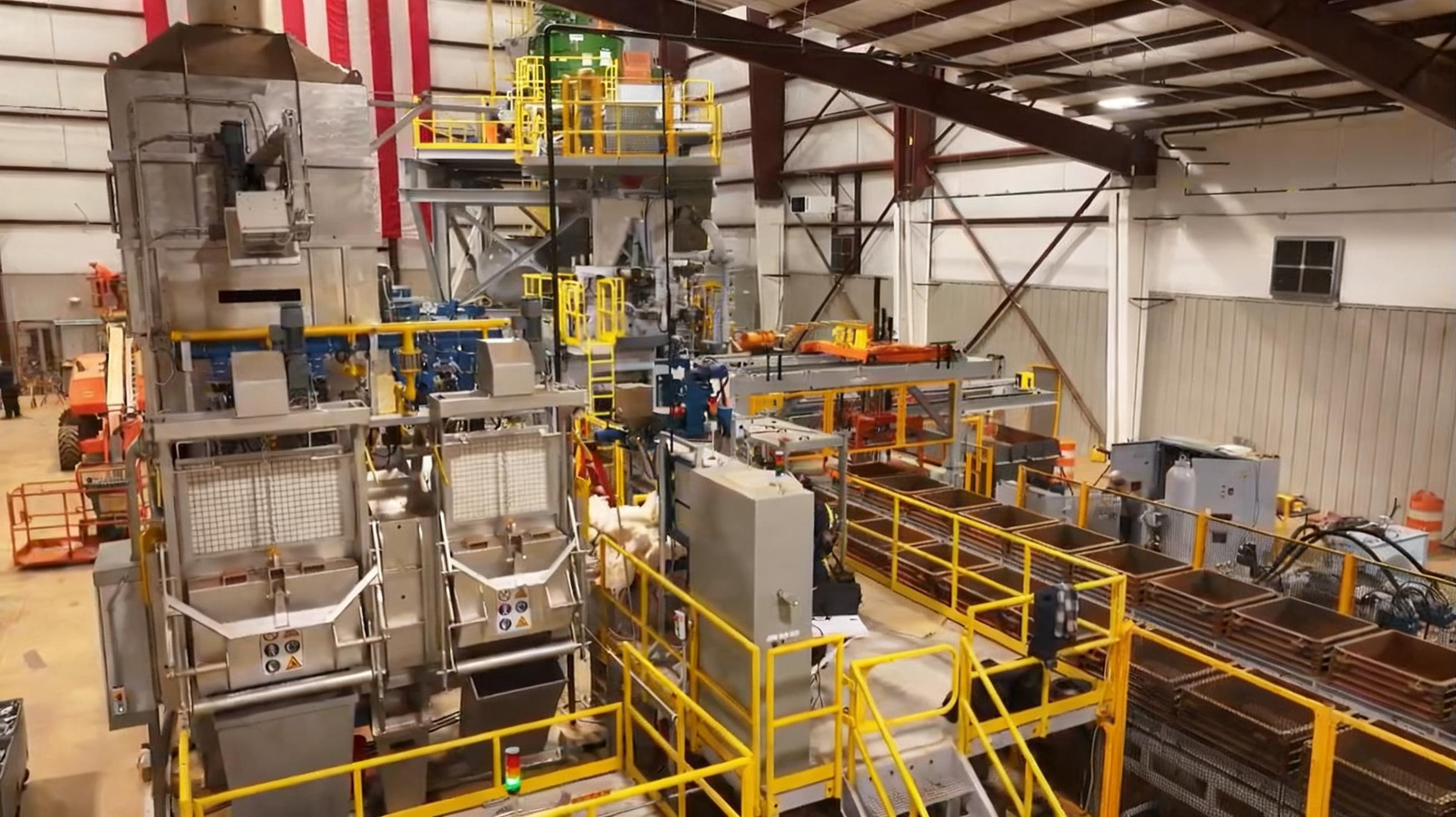
When Cast Products planned its $6.7 million automated foundry expansion, it needed more than additional melting capacity. It wanted a compact, efficient furnace that could support high-volume production without creating a large holding requirement or adding to operator workloads. It chose StrikoMelter.
Key results
- Higher melting capacity and improved production throughput
- Consistent, high-quality melt and reliable output
- Required melt rate without the need for a large holding bath
- Very little operator intervention across shifts
- Safer, more controlled handling of molten aluminum
- Efficient energy uses relative to the volume of aluminum melted
— Colby Medlen, Chief Operating Officer at Cast Products Inc.“We looked carefully at the different options, including a traditional reverberatory furnace. StrikoMelter was the best fit for our operation based on its footprint, maintenance requirements, melt quality and ability to provide the melt rate we needed without requiring a large holding capacity.”
Efficient melting for reliable, high-volume production
Cast Products, Inc. is a third-generation, family-owned aluminum casting manufacturer based in Athens, Alabama. Its latest 30,000-square-foot expansion adds a highly automated foundry alongside the company’s established operations.
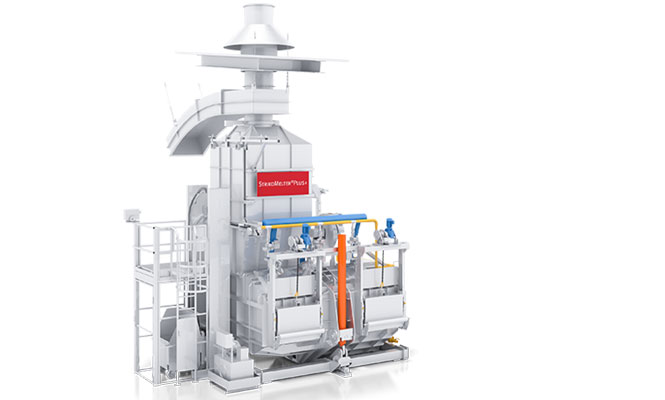
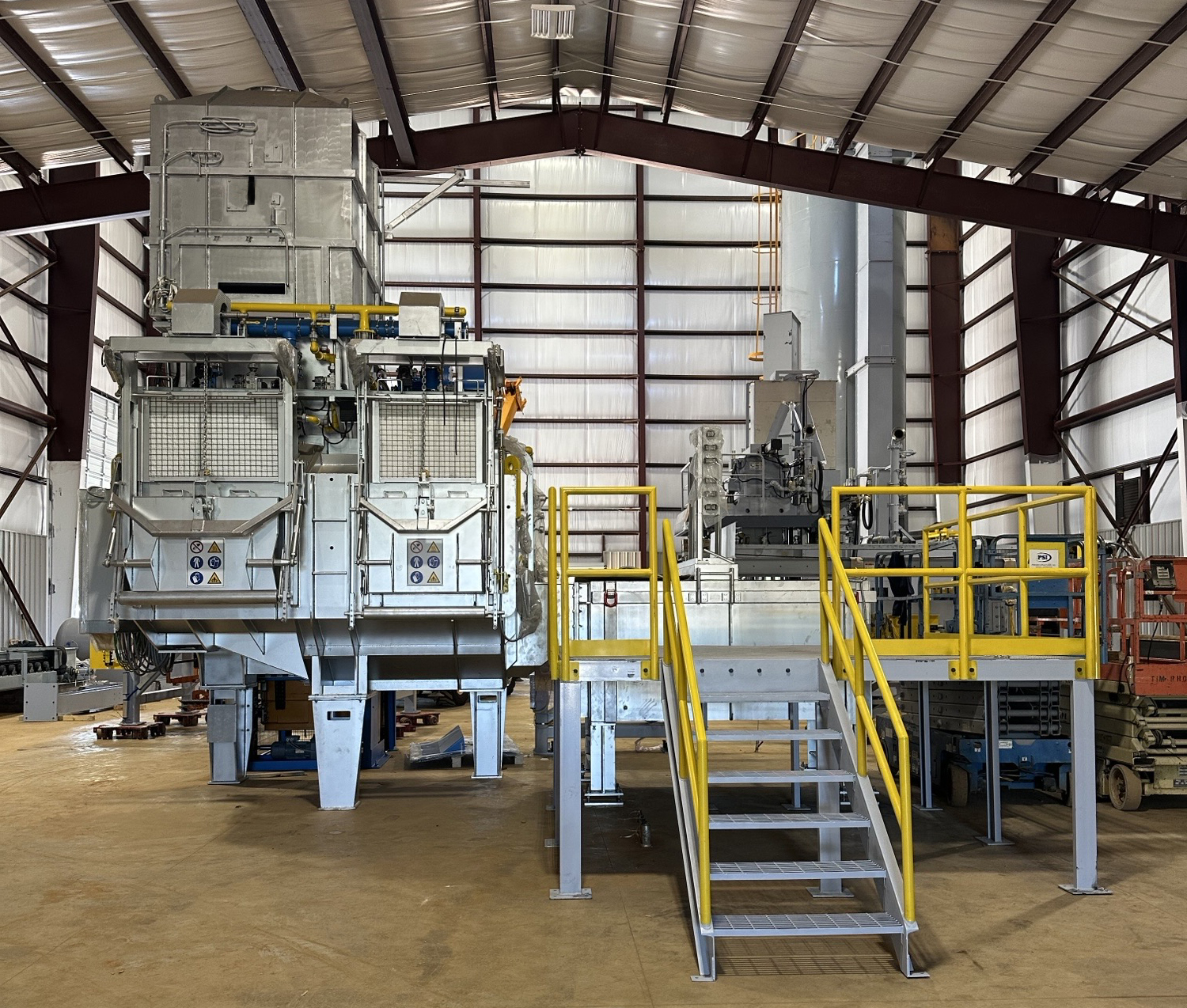
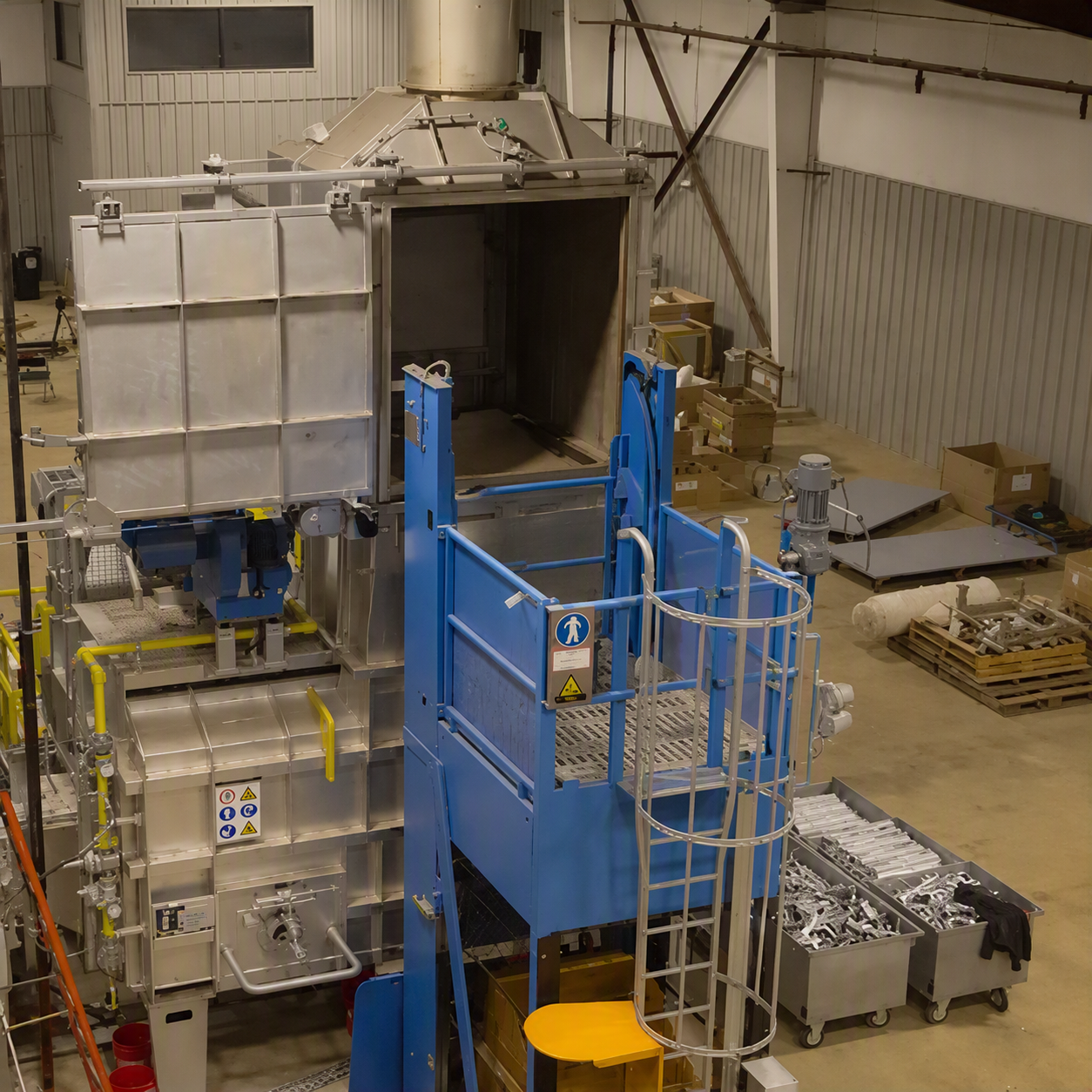
At its heart is a new automated molding line the StrikoMelter shaft melting furnace with HBT, is positioned to minimize manual molten metal handling and creates a more controlled process.
But why did Cast Products choose shaft melting rather than extend their existing crucible-furnace approach or invest in a traditional reverberatory furnace?
1. Increase capacity and efficiency beyond crucible melting
Cast Products’ older foundry uses electric crucible furnaces. While these continue to support established operations, the new automated line required a substantial increase in melting capacity and efficiency.
StrikoMelter was installed specifically for the expansion. Its high melt rate gives the new molding operation the volume of aluminum it needs while supporting a much more automated production process.
“We needed a furnace that could keep pace with the new line,” says Colby Medlen, Chief Operating Officer at Cast Products. “Compared with the crucible furnaces in our older foundry, StrikoMelter has significantly increased our melting capacity and allows us to pour more pounds per hour consistently.”
2. Achieve required melt rate without a large holding bath
Cast Products also considered an electric reverberatory furnace. Before making its decision, the team visited several foundries and assessed the available technologies against its requirements.
A significant consideration was the volume of molten aluminum that would need to be held in the furnace. StrikoMelter could provide the required melt rate without the large holding capacity associated with the reverberatory alternative.
The StrikoMelter and HBT combination creates a compact melting and holding arrangement close to the moulding line. Separately controlled melting and holding functions allow each stage to be managed according to production demand.
3. Automate melting for safer, more consistent production
Automation was central to the new foundry, and Cast Products wanted the melting operation to follow the same principle.
Once the charging elevator is supplied with metal, StrikoMelter requires little routine intervention beyond scheduled cleaning and operational checks. This reduces labor requirements and makes it easier to maintain consistent production across shifts, including when experienced operators are difficult to recruit.
Reducing manual interaction with the melting process also supports safer working. Compared with the company’s traditional crucible-furnace operation, less molten metal needs to be handled manually. “The StrikoMelter provides a much safer way to melt than the crucible furnaces we have traditionally used,” adds Medlen.
4. Recover heat to reduce energy use
StrikoMelter shaft furnaces use a counter-flow principle to recover heat from the melting process. Hot exhaust gases rise through the shaft as incoming charge material travels downwards, preheating the aluminum before it reaches the main melting zone.
This reduces the additional energy needed to bring the charge to melting temperature. Once melted, the aluminum enters a separate holding area, where it can be maintained at the temperature required for production. Separating melting and holding also limits the time aluminum spends in the furnace’s highest-temperature zone, helping protect melt quality and usable metal yield.
Performance varies according to furnace configuration, charge material and operating conditions. Across the wider StrikoMelter range, models achieve measured energy consumption as low as 489 kWh/t under stated reference conditions, together with metal yield of up to 99%.
— Colby Medlen, Chief Operating Officer at Cast Products Inc“One of the biggest advantages is the level of automation,” explains Colby Medlen, Chief Operating Officer at Cast Products Inc. “As long as the charging elevator remains supplied and routine cleaning is maintained, the furnace requires very little operator intervention. That reduces labor demands and makes it easier to maintain consistent operation across every shift.”
Cast Products has found its gas-fired StrikoMelter to be significantly more energy efficient than both the electric crucible furnaces in its older foundry and the electric reverberatory systems considered for the expansion. “Based on the amount of aluminum we are melting, it has proved to be a very efficient system,” says Medlen.
Proven value in first six months
Six months into operation, StrikoMelter has integrated successfully with Cast Products’ automated molding equipment. The company is seeing the benefits in production throughput, utility consumption and the consistency of its melting operation.
“The StrikoMelter delivers a consistent, high-quality melt in a very energy-efficient and highly automated way,” concludes Medlen. “It has been reliable, requires relatively little operator training and has been an excellent fit for our automated foundry.”
Discover more